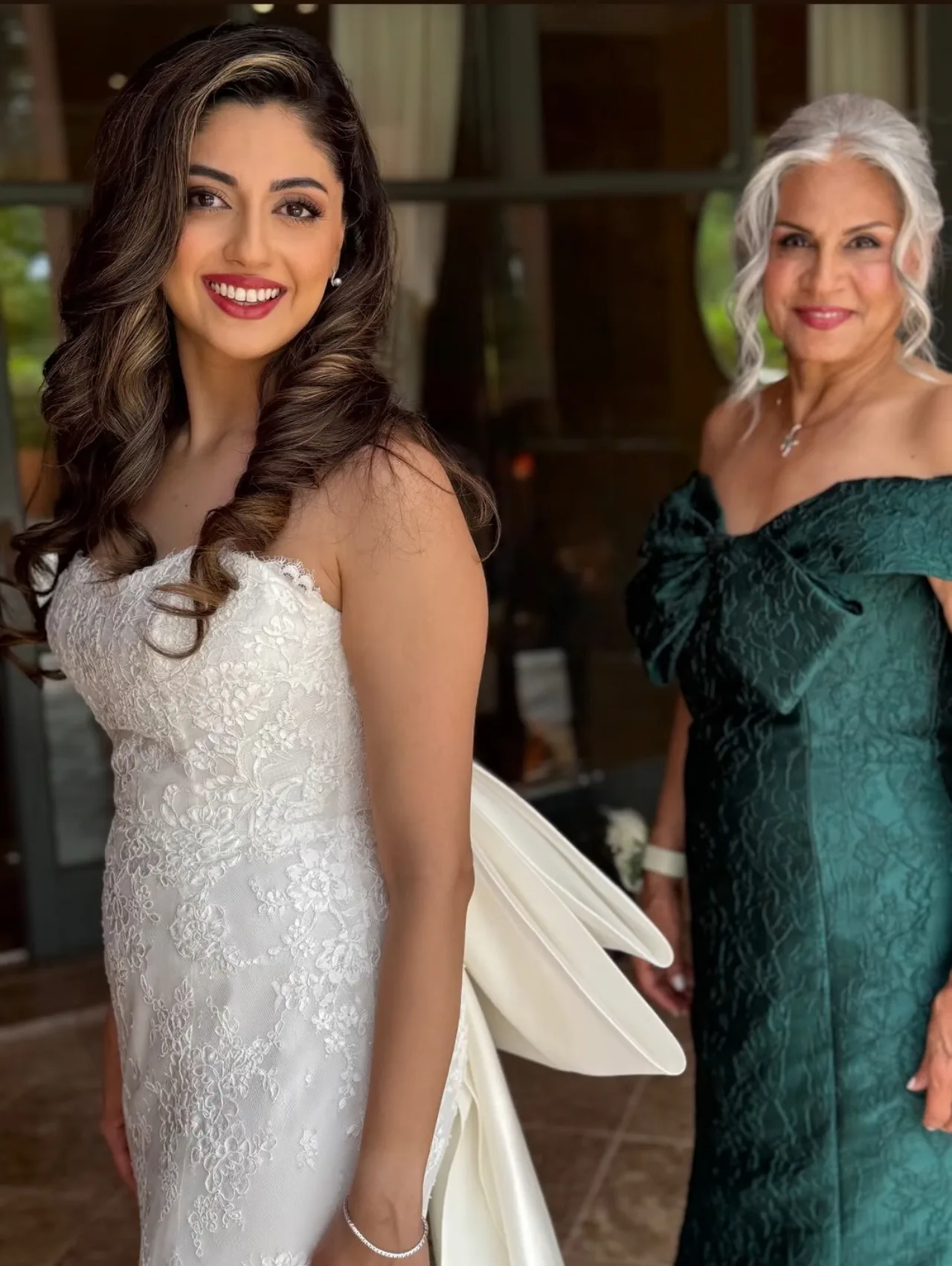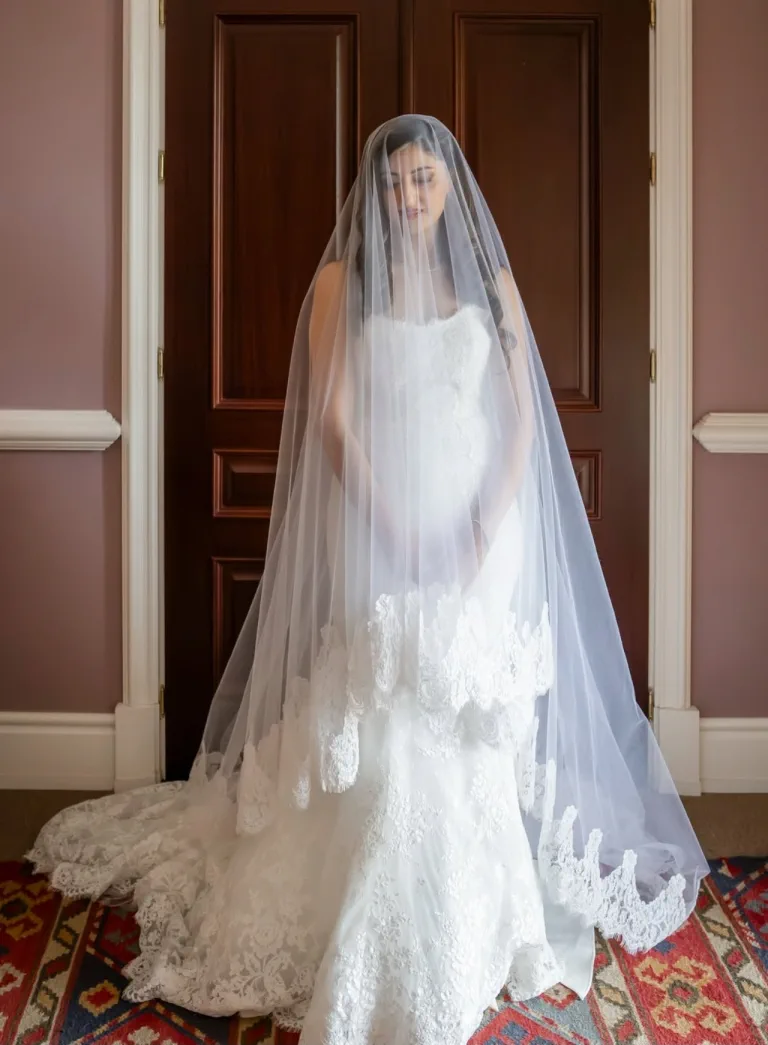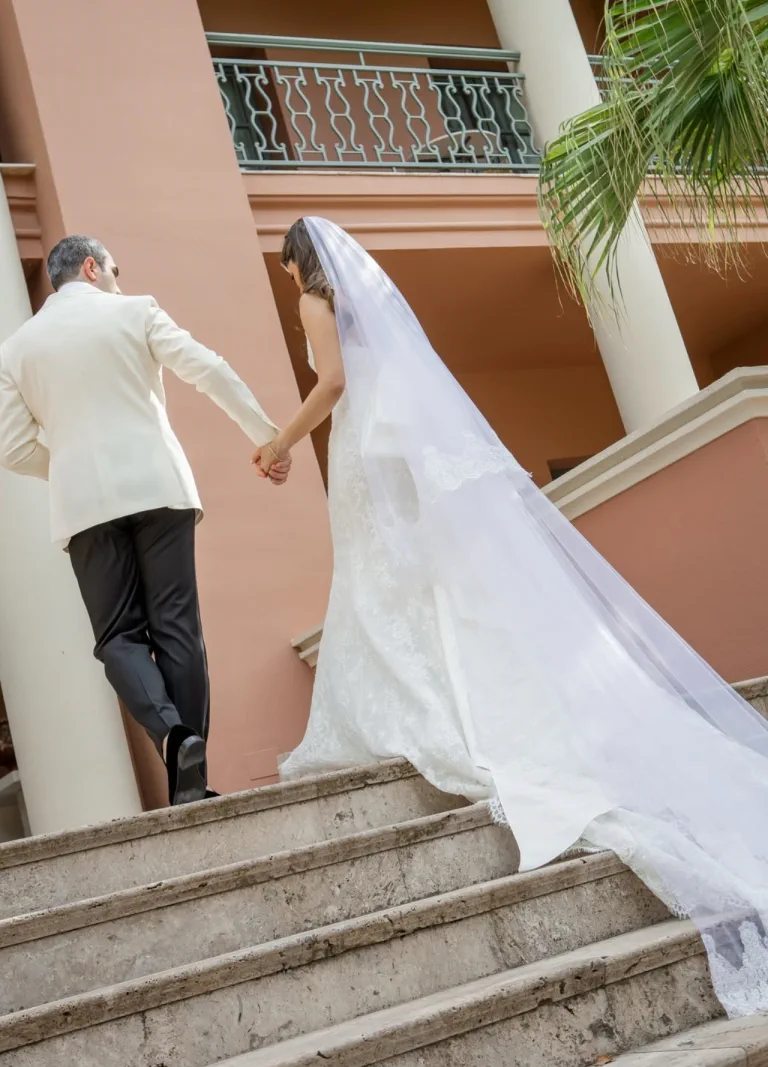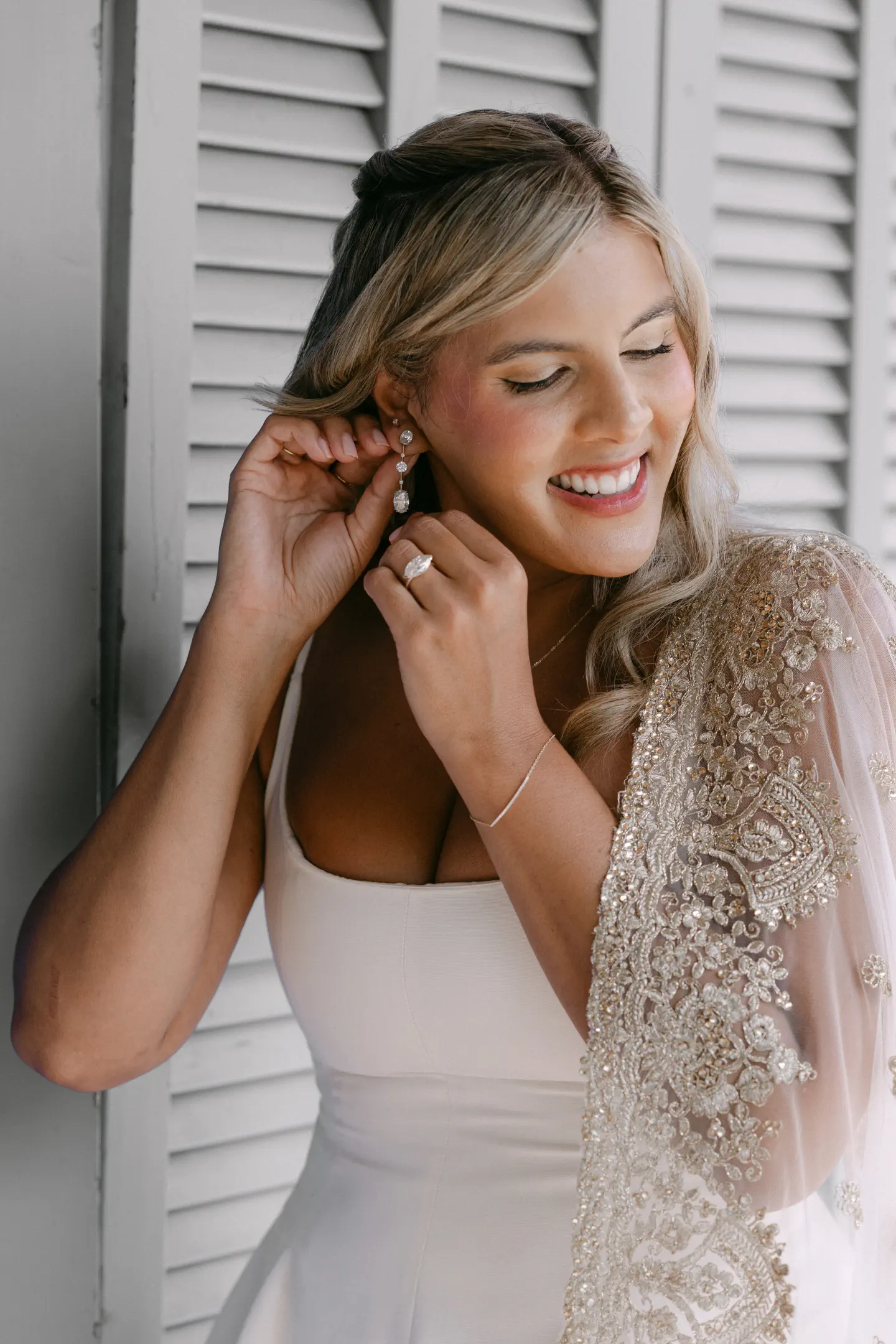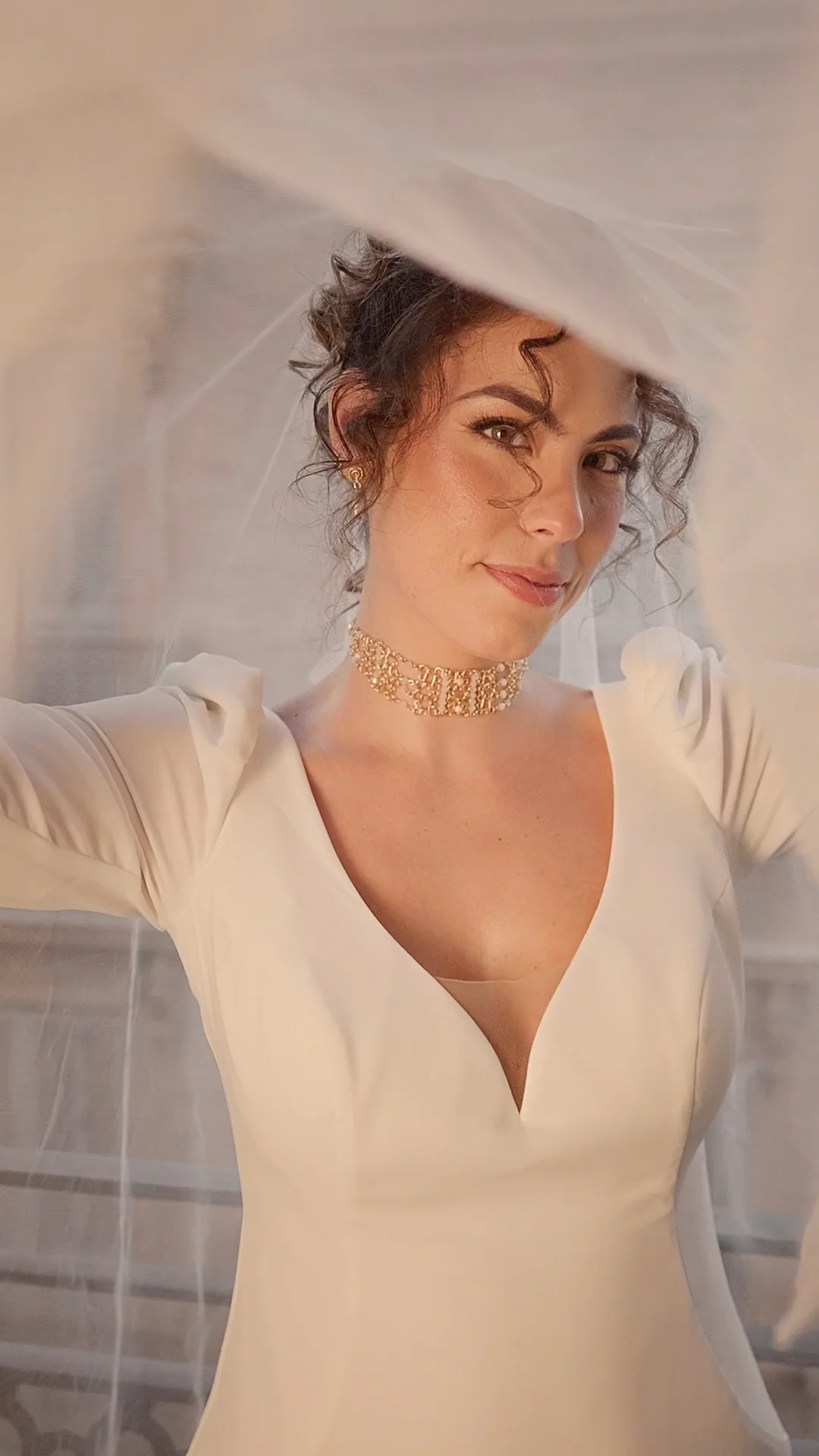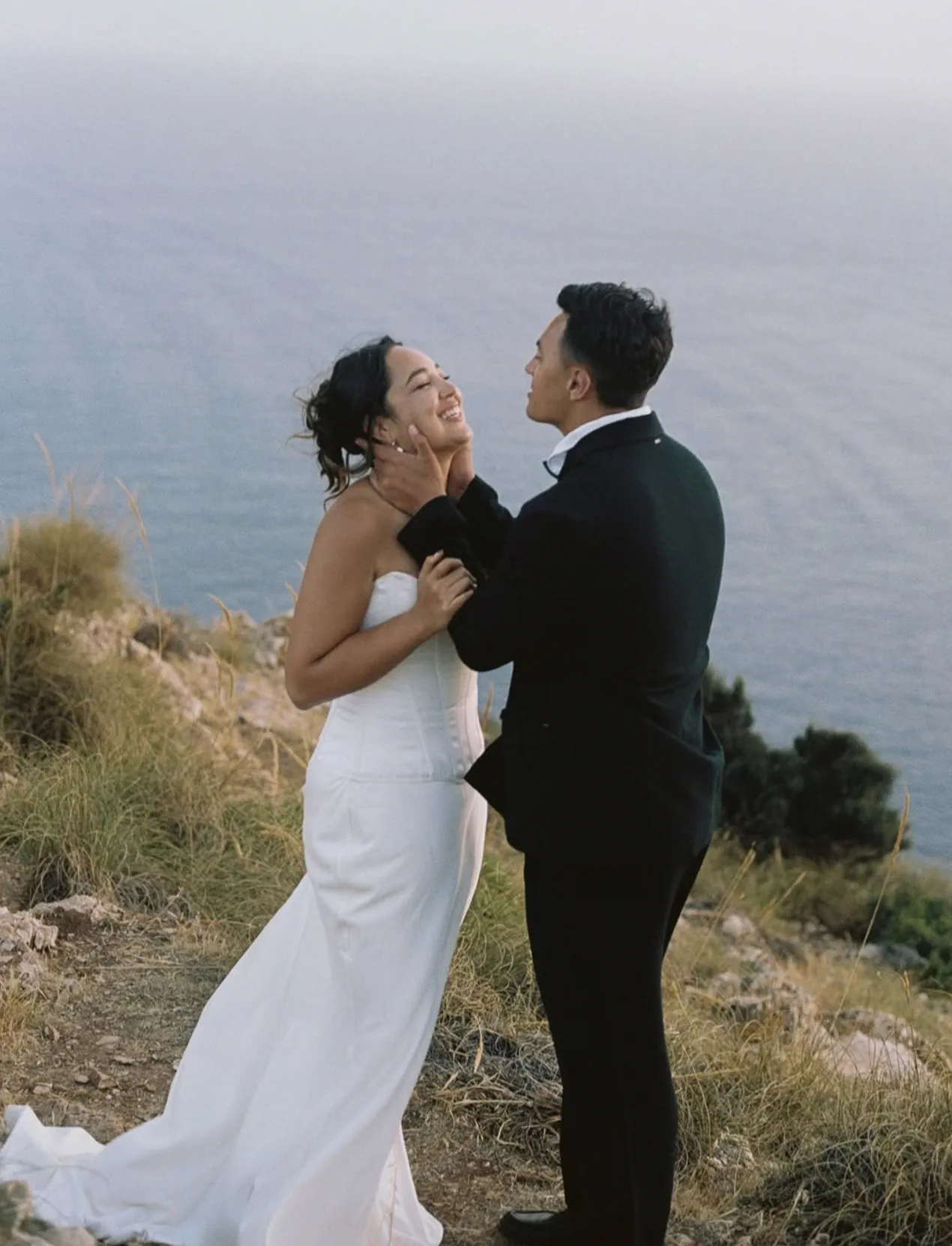
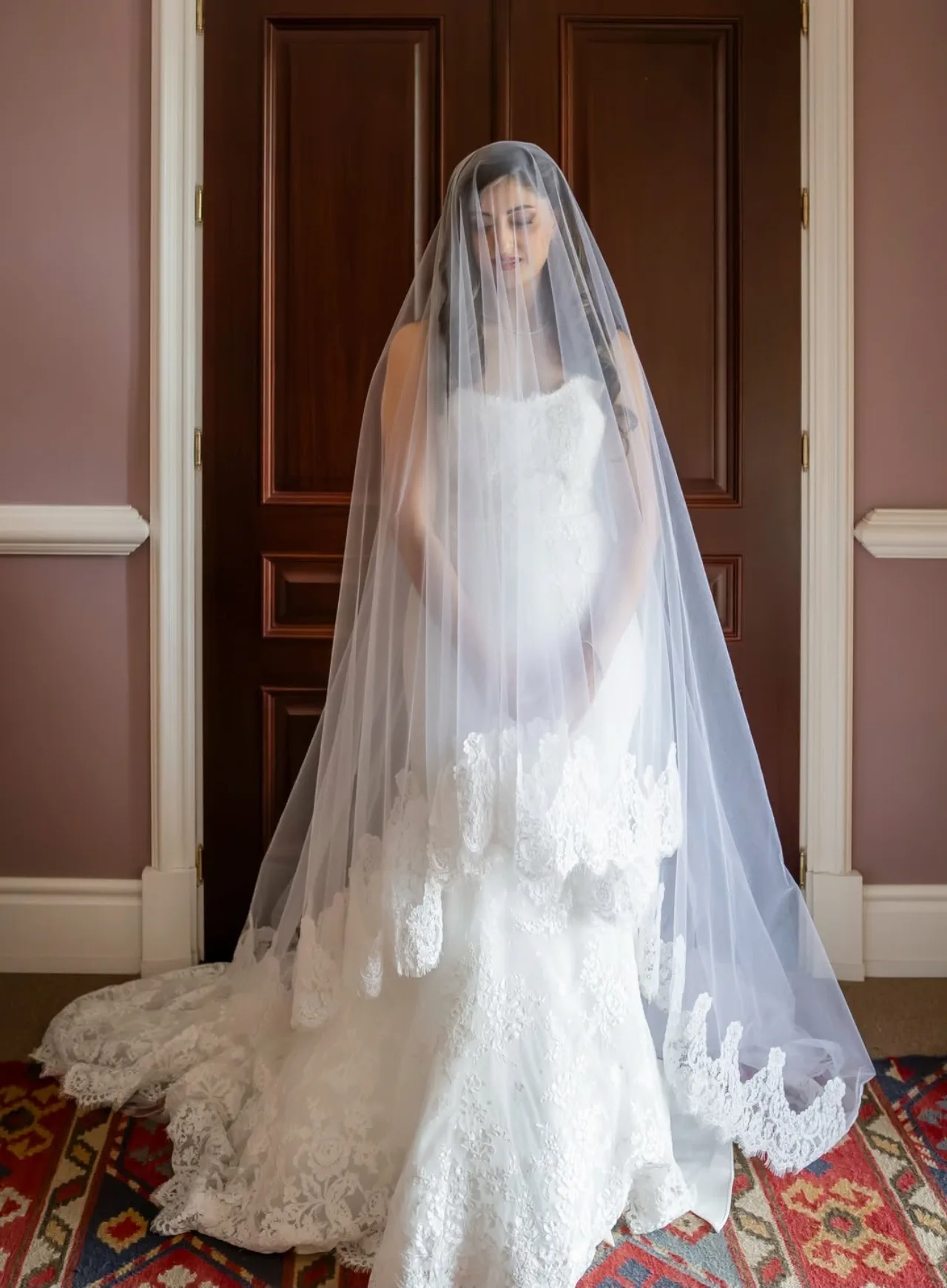
The mantilla is a lace veil, and one of the most traditional pieces of a Spanish wedding. Fewer brides choose it every year, yet the most classic ones, above all in Andalusia, still wear it, with a peineta or without one. It is easy to see why: in photographs it has a presence that very few pieces achieve. Choosing between a mantilla and a veil changes the way it is placed and also the wedding hairstyle that holds it, so it helps to know both options before the trial.
How a mantilla veil differs from a tulle veil
A mantilla is made of lace, and it is traditionally worn over a peineta, the tall ornamental comb that lifts it above the updo. A veil is made of tulle, which is lighter, and it is fastened straight into the hairstyle. Between the two, a newer style has brought them closer: the lace veil with a mantilla look, which has a vintage air somewhere between Spanish and Italian. It is often worn without a peineta and placed just like a veil.
Are mantilla veils Spanish?
Yes. The mantilla is one of the most traditional pieces of a Spanish wedding, and classic brides in Andalusia still choose it. The lace veil with a mantilla look, a more recent style, has a vintage feel between Spanish and Italian.
How to wear a mantilla veil with or without a peineta
With a peineta, the comb goes in first, pushed in above the updo, and the mantilla is laid over it. From there the lace falls around your face and shoulders. When a mantilla or a lace veil is worn without a peineta, the placing changes: the lace is sewn into the updo with hairpins, so it becomes part of the hairstyle and does not shift.
How does a mantilla veil stay on?
With a peineta, the comb is pushed in above the updo and the mantilla rests on it. Without one, the lace is sewn into the updo with hairpins.
The hairstyle a mantilla needs
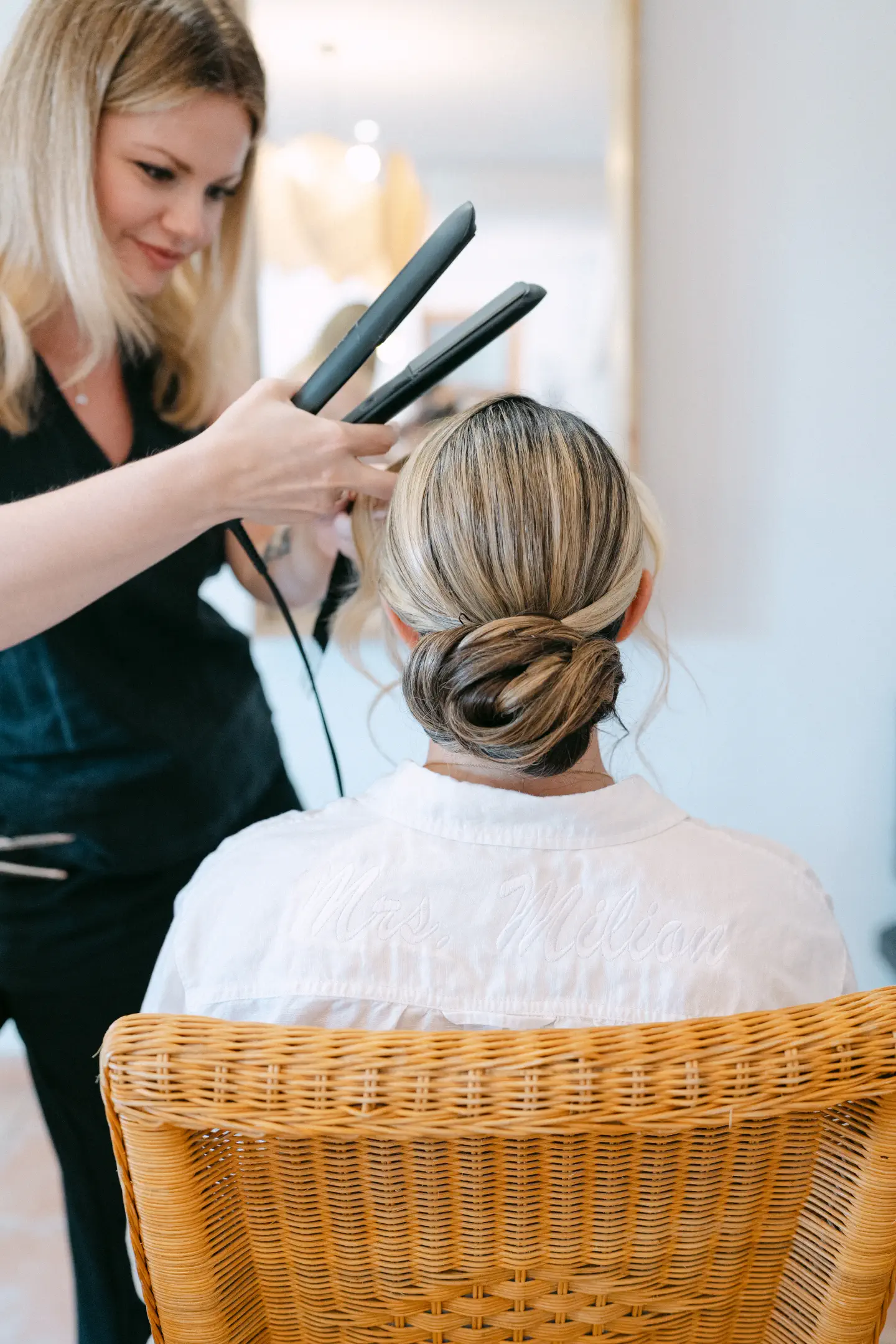
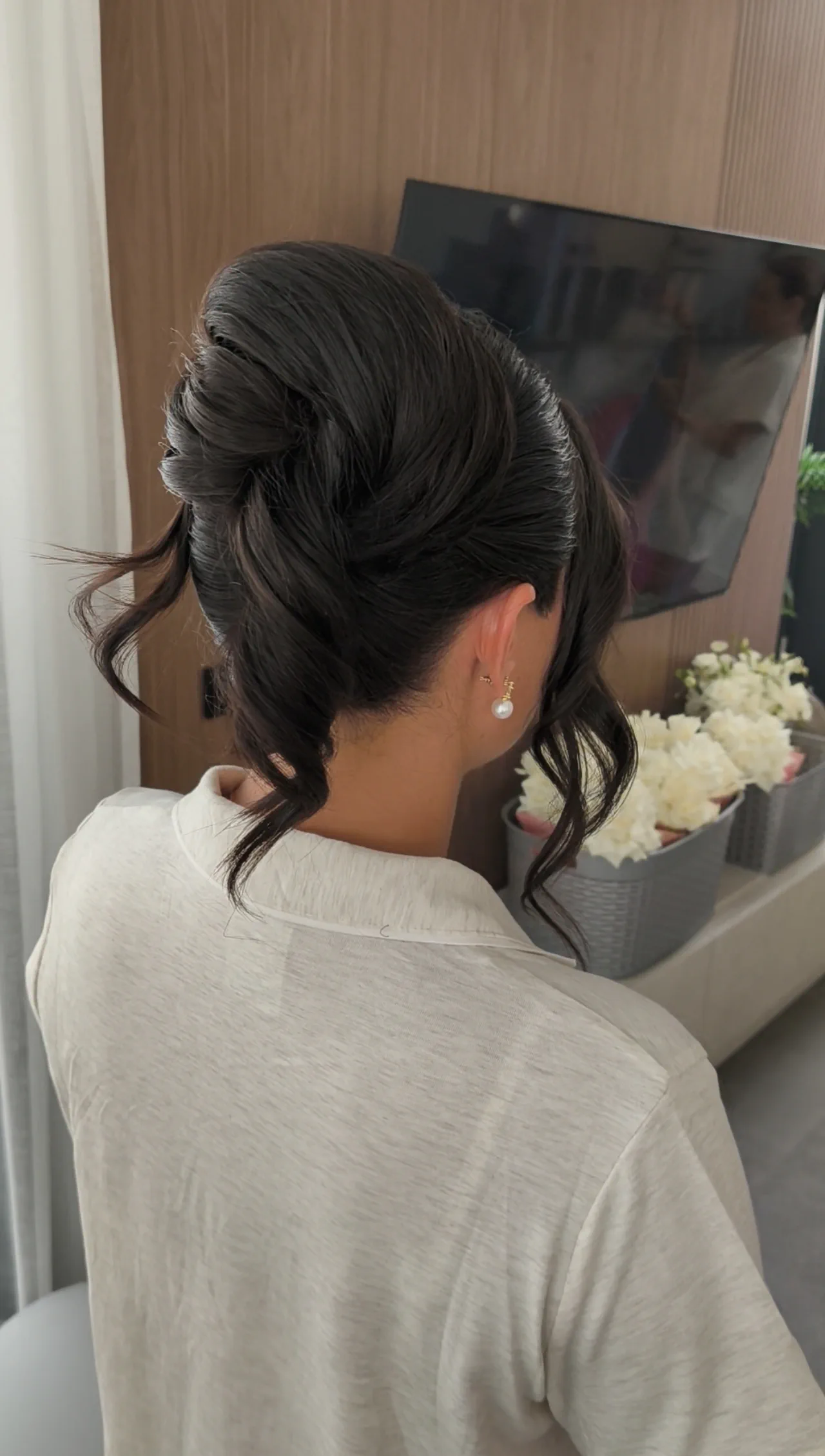
A mantilla is always worn with the hair up. With a peineta it cannot be worn on loose hair, because the comb would have nothing to grip and the whole piece would have neither hold nor structure. The mantilla is also a deeply traditional piece, and it only makes sense when everything around it speaks the same language. That is why it sits so well on a clean, classic, polished updo, such as a sleek low bun.
How to wear your hair with a mantilla veil?
An updo. With a peineta, loose hair gives the comb nothing to hold on to. A clean, classic, polished updo suits it best, in keeping with the tradition of the piece.
How a long tulle veil is secured

Most veils come from the bridal shop with a small comb already sewn in. The comb slides into the updo, stays very discreet and does not move all day. It is the simplest way, and the safest.
Some veils arrive with no comb at all, just the tulle. Those are sewn into the hairstyle with hairpins, the same way as a mantilla without a peineta. This option even allows the veil to be worn with your hair down: a small structure is built inside the hair, where nobody can see it, and the veil is sewn onto it.
Each type of fastening is explained in more detail in how a bridal veil is secured.
When the veil or mantilla comes off
The veil usually comes off after the ceremony, on the way to the drinks reception. A few photographs are often taken in between with the veil still on, because it is still a beautiful element for the camera, and then it is removed. If it has been placed well, taking it off is easy. If you have not booked anyone to help at that moment, someone from your family or from the planning team can do it.
If you are torn between a mantilla and a veil, bring them to the trial or show me a photograph. That is where you see how each one sits on your hairstyle and which way of placing it suits you best.